Curriculum in IDD Healthcare Is Closing a Critical Gap in Clinical Education
A credentialed eLearn course that prepares physicians, nurse practitioners, and other clinicians to deliver competent, person-centered care to people with IDD. Ideal for Medical Students.
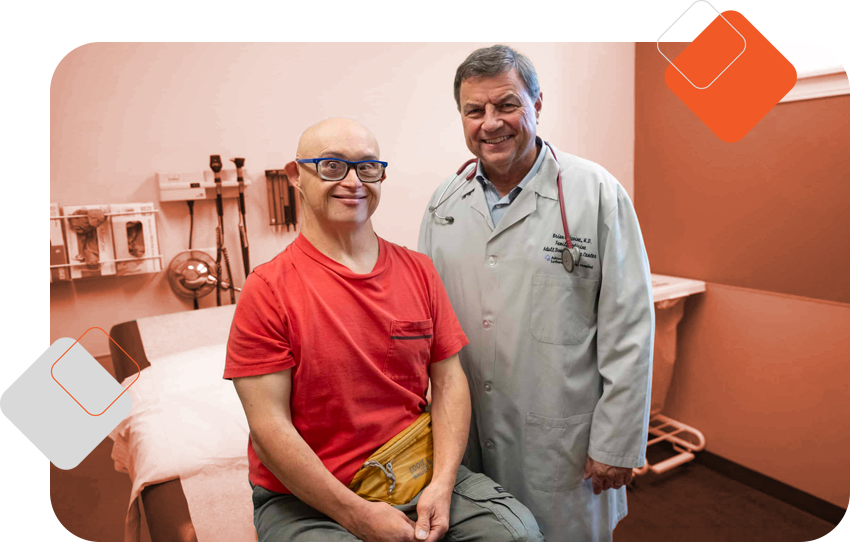
IDD Healthcare Fundamentals for Clinicians, by a Clinician
Practicing clinicians are calling for it to be “mandatory for all medical students.” The Curriculum in IDD Healthcare (CIDDH) teaches the fundamentals of IDD healthcare, providing learners with pertinent, practical information they can use immediately in their practice to improve outcomes, reduce suffering, and prevent unnecessary deaths among their patients with intellectual and developmental disabilities.
This course is currently used by medical and nurse practitioner schools, state agencies, managed care organizations, numerous clinical organizations, and individual physicians who desire to improve clinical knowledge in this area.
- Unlock the language of behavior and how it can point to specific underlying medical causes
- Improve communication between clinicians and supporters of people with IDD to facilitate better healthcare
- Learn from real-life case studies

IntellectAbility Recognized Provider in IDD Healthcare Award
In addition to earning valuable Physician CME or Nursing CEU credit, clinicians who complete the course are eligible for the IntellectAbility Recognized Provider in IDD Healthcare award, which indicates their commitment to providing quality healthcare to people with IDD.
Explore What’s Possible With CIDDH
Connect with an IDD Health Training Expert to explore how CIDDH can support your team, strengthen clinical decision-making, and improve outcomes for people with IDD.
Course Overview
5 CME / 6 CEU Credit Hours | Duration: 4.5 hours
OVERVIEW
The Curriculum in IDD Healthcare consists of 6 modules that teach practical skills that improve clinical competence in the provision of healthcare to people with IDD.
Numerous, real-world case studies are used to illustrate concepts that help students and clinicians at any level to improve their skillset and provide competent, compassionate healthcare to people with complex neurodevelopmental, medical and mental health conditions.
IDD BASICS: THEN, NOW AND NEXT
Module Length: 37 Minutes
Diagnosis, causes, prevalence, and classifications are covered. The history of IDD treatment and the reasons for the move from institutional to community-based support are covered, and much more.
HEALTHCARE BASICS IN IDD
Module Length: 1 Hour 2 Minutes
A discussion of common medical issues, their presentations, and general treatment options is covered. This discussion includes the “Fatal 5+”—Constipation, Aspiration, Dehydration, Seizures, and Sepsis—as well as other topics like GERD, osteoporosis, contraception, feeding tubes, wheelchairs, end-of-life considerations, and basic dental issues.
COMMON BEHAVIORAL PRESENTATIONS OF MEDICAL CONDITIONS IN PEOPLE WITH IDD
Module Length: 34 Minutes
Using real-life case studies, this module effectively illustrates how numerous challenging behaviors may point to specific, underlying medical conditions in people with IDD. Topics include head-banging, refusing meals, hand-mouth behavior, aggressiveness in particular situations, resisting lying down or sleeping, pica, and many more.
DUAL DIAGNOSIS IN IDD
Module Length: 46 Minutes
This module explores the challenges of diagnosing mental health conditions in people with IDD. It covers how certain non-verbal behaviors may point to a mental health condition and the importance of evaluating for underlying medical conditions before instituting treatment for adverse behaviors with psychotropic medications.
EFFECTIVE COMMUNICATION FOR IDD HEALTHCARE
Module Length: 31 Minutes
This talk covers topics including understanding the differing baselines of people with IDD; fostering good communication between healthcare providers and support staff; speaking to the patient rather than directing communication to support staff; how to gather the most helpful information from support staff; and understanding the structure of the team model of support.
BRINGING IT ALL TOGETHER: CASE STUDIES IN IDD HEALTHCARE
Module Length: 34 Minutes
While case studies are sprinkled throughout the other presentations, this highly interactive workshop-style module focuses on specific cases to drive home the previously discussed topics and illustrate practical applications of the information.

About the Author
Curriculum in IDD Healthcare was developed and is delivered by Dr. Craig Escudé, who has over 20 years of clinical experience treating people with severe and profound levels of IDD and extensive experience training hundreds of clinicians, case managers, social workers, direct support professionals, and others who work in this field. He is also one of a handful of Fellows of the American Academy of Family Physicians (FAAFP), the American Academy of Developmental Medicine (FAADM), and the American Association on Intellectual and Developmental Disabilities (AAIDD).

Continuing Education Credit Information
The AAFP has reviewed Curriculum in IDD Healthcare and deemed it acceptable for up to 5.00 Enduring Materials, Self-Study AAFP Prescribed credits. Physicians should claim only the credit commensurate with the extent of their participation in the activity.
AAFP Prescribed credit is accepted by the American Medical Association as equivalent to AMA PRA Category 1 credit(s)™ toward the AMA Physician’s Recognition Award. When applying for the AMA PRA, Prescribed credit earned must be reported as Prescribed, not as Category 1.
AAFP-prescribed credit is accepted by the following organizations. Please contact them directly about how participants should report the credit they earned.
- American Academy of Physician Assistants (AAPA)
- National Commission on Certification of Physician Assistants (NCCPA)
- American Nurses Credentialing Center (ANCC)
- American Academy of Nurse Practitioners Certification Board (AANPCB)
- American Association of Medical Assistants (AAMA)
- American Board of Family Medicine (ABFM)
- American Board of Emergency Medicine (ABEM)
- American Board of Preventive Medicine (ABPM)
- American Board of Urology (ABU)
Eligibility to use these credits as continuing education for other disciplines would be determined by individual licensing boards.
Nurses can receive 6.0 contact hours approved by an Approver Unit, in accordance with rules and regulations outlined by the Ohio Board of Nursing (OBN). Nurses should always check with the state nursing board where they practice to ensure the OBN contact hours are accepted for continuing education credit.

American Board of Medical Specialties Portfolio Program™ Sponsor
Curriculum in IDD Healthcare is an integral part of IntellectAbility’s American Board of Medical Specialties Portfolio Program™ Sponsor Activity, Improving Care for Patients with Intellectual and Developmental Disabilities (IDD). This QI activity is approved for Maintenance of Certification (MOC) credit from participating ABMS Member Boards or the National Commission on Certification of Physician Assistants (NCCPA). It is designed to expand clinicians’ knowledge of IDD healthcare and increase their confidence in treating people in this patient population.
Available For Individual Purchase For $395
License this eLearn for one user for six months.
Studies & Testimonials Validate the Efficacy of this Course
Independent, Peer-Reviewed Study
An independent, peer-reviewed study demonstrated that Curriculum in IDD Healthcare is effective in improving clinicians’ knowledge of IDD healthcare.From the study’s authors, John P. Bartkowski and Xiaohe Xu:
“Highly effective results were especially evident in measures of the program overall, where the presentations were rated with respect to expectations, improvement of a trainee’s medical practice, presenter knowledge, and willingness to recommend the training to others.”
“CIDDH often proved to be quite effective. In many cases, superlative (highest possible) ratings outnumbered the combination of mid-range and deficient ratings by a factor of 3 to 1, meeting or exceeding the 75% superlative response threshold.”
“By addressing the unique needs of individuals with IDD, healthcare training programs like CIDDH can reduce health disparities and improve the quality of life among patients with IDD.”
Study by William Carey University College of Osteopathic Medicine
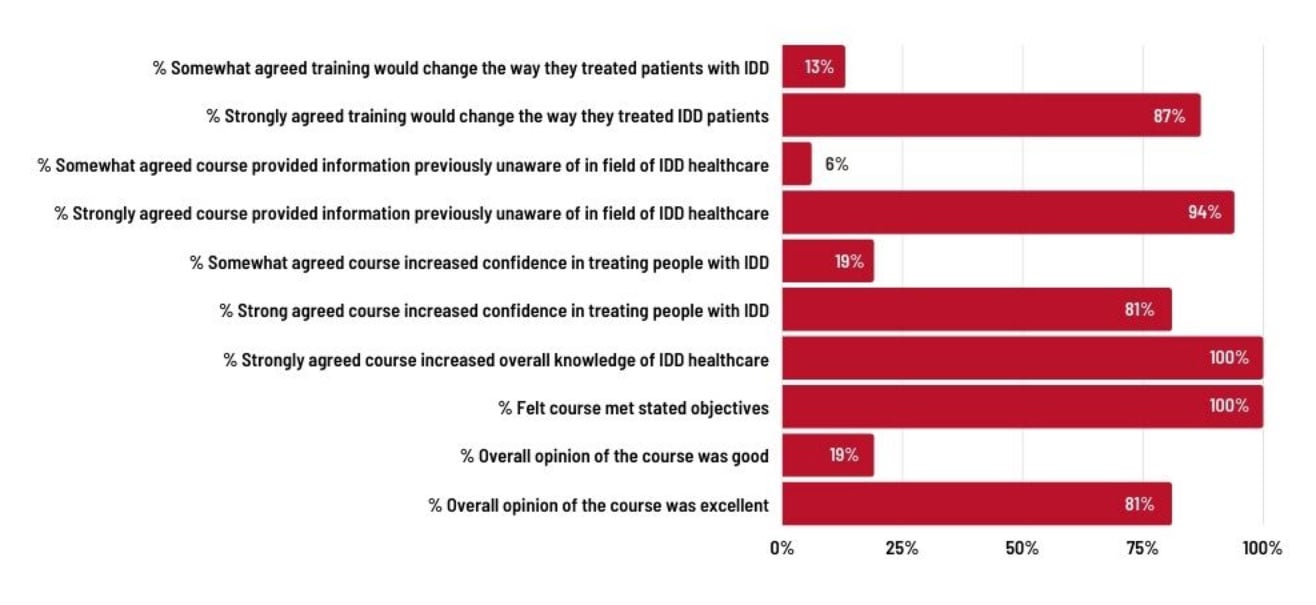
A study was conducted by William Carey University College of Osteopathic Medicine about the efficacy of IntellectAbility’s Curriculum in IDD Healthcare eLearning course in teaching medical students about the fundamentals of IDD Healthcare.
Based on the data, the researchers concluded that the online course was successful in increasing students’ knowledge of IDD healthcare, their confidence in treating people with IDD, and their ability to deliver effective medical care to people with IDD.
Here is a graph depicting the results of the study taken from the poster presented at the American Association of Colleges of Osteopathic Medicine’s Education Leaders 2021 conference.

Curriculum in IDD Healthcare in Action
Clinician Testimonials
"This course should be mandatory for all medical students. [It] would also benefit mid-level providers and nurses—in fact, providers from every discipline and level of experience would benefit from this course! "
Julie Chrisholm, FNP-C
"These course were great. They were exactly what we were looking for. Thank you for doing this! As we grow we will certainly have all our providers take your modules. "
E.G., RN, BSN, CDDN, Medical Services Director
"All medical providers and dentists should be required to take this course, and in my current job assisting IDD clients, I had no training or exposure to IDD healthcare. This is a wonderfully condensed program full of valuable information. "
Stephen Kelly, DO
Medical Student Testimonials
"The layout was very well organized. I liked how it provided lists of questions and things to consider when dealing with IDD patients. There was good practical advice about things we could start asking immediately."
Andrew George, 1st year medical student, WCUCOM
"The modules were easy to use. The material was professional and well presented."
N.U. 4th year medical student, WCUCOM
"I really liked the way the information was presented (flow of information, conciseness, relevant examples from experiences, etc.) The quality of information in this online course is one of the best I have had!"
Chloe Telles, medical student, WCUCOM
Contact Us Today To Get Started
Better diagnose and treat patients with pertinent, practical advice you can implement immediately.
When We Educate Clinicians, We Save Lives
“It’s more than just learning about how to treat medical conditions commonly seen in people with IDD like aspiration pneumonia and bowel obstruction. Physicians should be taught about the support structure for people with IDD, how to facilitate better communication and, most importantly, about the often-missed direct relationship of various adverse behaviors to treatable, underlying medical causes.”
Learn More About the Need to Educate Healthcare Providers in IDD Healthcare
- Click here to read real accounts from nurses about negative physician encounters.
- Click here to watch a 30-minute recorded webinar delivered by Dr. Craig Escudé.
Improve Healthcare for Anyone Who Has Challenges in Communicating Verbally
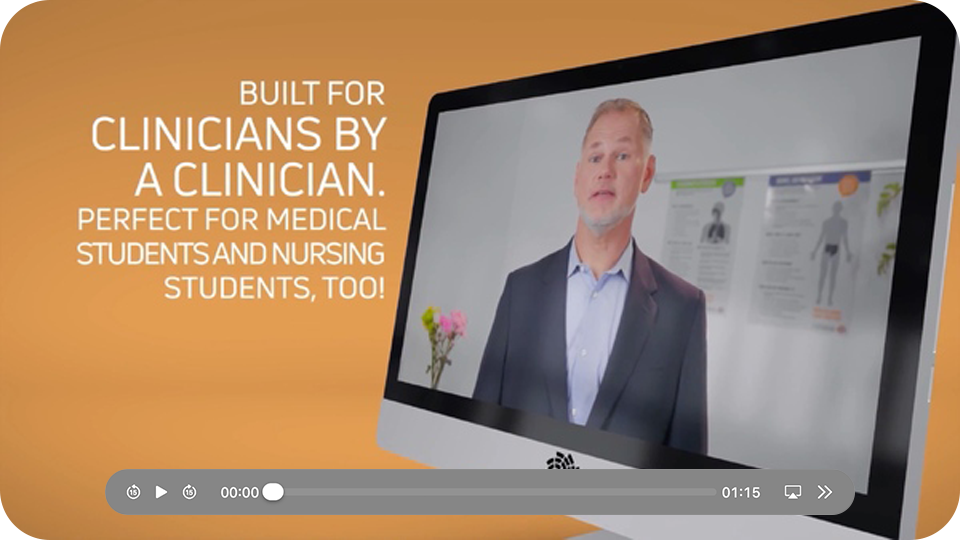
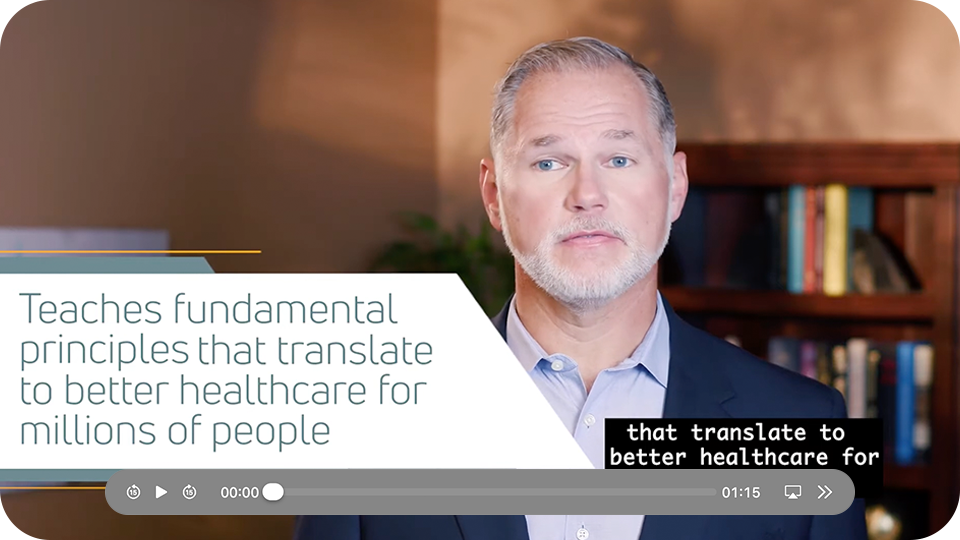
Watch this two-minute video to learn how Curriculum in IDD Healthcare imparts vital skills and information to improve healthcare for anyone who has challenges communicating verbally. This includes people with dementia, traumatic brain injury, those who are aging, children, and the group for which the course was specifically designed, people with intellectual and developmental disabilities.
The National Council on Disability Supports IDD Training for All Healthcare Professional Schools
One of the four major components of the National Council on Disability’s Health Equity Framework includes: “requiring comprehensive disability clinical-care curricula in all US medical, nursing, and other healthcare professional schools and requiring disability competency education and training of medical, nursing, and other healthcare professionals.”